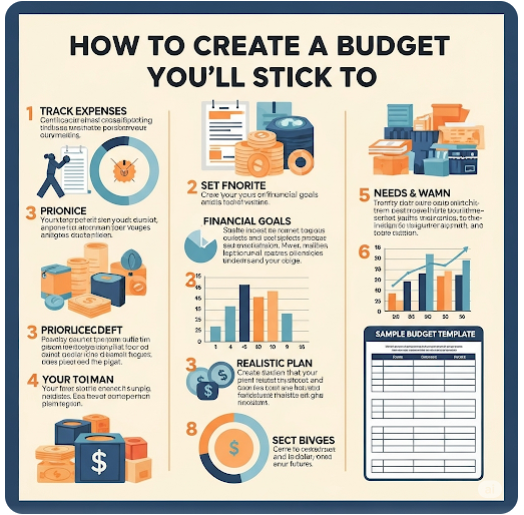
Introduction
Creating a budget is one of the most empowering financial habits anyone can adopt. It gives structure to your income and a sense of direction to your spending. But while making a budget on paper is straightforward, living by it day after day is where the real challenge lies.
This article offers a grounded, conversational, and practical approach to budgeting. Whether you’re a recent graduate managing your first paycheck or a family trying to juggle bills and savings, you’ll find actionable insights tailored to your everyday life. Let’s walk through the process of not just creating a budget—but creating one that actually works for you.
Why Budgeting Matters in Real Life
Beyond spreadsheets and apps, budgeting is about peace of mind. It’s knowing that when your rent is due, the money is there. That an emergency car repair won’t drain your savings. That your vacation is already paid for before the plane takes off.
Budgeting helps you:
- Stay out of debt by living within your means
- Understand spending patterns that might be hurting you
- Save intentionally for things that truly matter
- Sleep better at night knowing you’re in control of your money
Step 1: Clarify Your Money Goals
Start with the big picture. What’s your money working toward? Without purpose, a budget becomes a chore. With goals, it becomes a plan.
Think About:
- Getting rid of credit card debt?
- Saving for a new bike, car, or house?
- Planning a wedding or a solo trip?
- Building up your retirement or emergency fund?
Take 10 minutes and write down three goals: one short-term, one mid-term, and one long-term. Keep it real and personal.
Step 2: Know Your Actual Income
Budgeting starts with what’s coming in. This isn’t your CTC or gross income. It’s your take-home pay—after taxes, insurance, EPF, and deductions.
Include:
- Monthly salary (post-tax)
- Freelance or part-time gigs
- Side hustles
- Rental income or dividends
Be honest. If income fluctuates, take an average of the last 3–6 months. When in doubt, under-budget. It’s better to be safe than sorry.
Step 3: Look at Where Your Money Is Going
This part can be eye-opening. For one month, track every single rupee you spend. Not just the rent or EMI—but the coffee, fast food, and impulse buys too.
Categories to monitor:
- Rent or home loan payments
- Groceries and essentials
- Utilities (electricity, water, phone, Wi-Fi)
- Commute costs (petrol, metro, auto)
- Dining out
- Subscriptions (OTT, music, apps)
- EMIs and loan repayments
- Random spending
Use a notes app, Google Sheets, or apps like Walnut or Money Manager. Tracking is half the battle.
Step 4: Pick a Budgeting Style That Matches Your Life
There are different ways to budget. Choose what aligns with your mindset, income pattern, and lifestyle.
1. 50/30/20 Rule
A classic and simple formula:
- 50% for needs
- 30% for wants
- 20% for savings and debt repayments
2. Zero-Based Budgeting
Assign every rupee a job. Income – Expenses = Zero. It’s tight but leaves no room for mindless spending.
3. Pay Yourself First
Set aside savings right after you’re paid, then manage the rest.
4. Envelope System (works digitally too)
Set spending caps for each category (groceries, entertainment, etc.). Stop spending once it’s used up.
Step 5: Draft Your Monthly Budget
Now, build your actual monthly plan using your tracked data and budgeting style.
Sample Plan (Income: ₹60,000)
- Rent: ₹12,000
- Food & groceries: ₹7,000
- Utilities: ₹2,000
- Commute: ₹3,000
- Entertainment: ₹3,000
- Savings: ₹10,000
- Loan EMIs: ₹15,000
- Miscellaneous: ₹8,000
This is your rough sketch. Adjust it monthly until it feels balanced.
Step 6: Review and Revise
Budgets are living documents, not static rules. Every month is different. Reassess and realign.
Ask:
- Did I overspend? Why?
- Did I meet my savings goal?
- Can I trim any fixed or variable costs?
Small adjustments—like switching mobile plans or shopping smarter—can free up more for savings.
Step 7: Let Technology Help
Manual tracking can be tedious. Apps can do the heavy lifting.
Useful Budgeting Apps:
- Walnut: Auto-categorizes expenses via SMS
- Money View: For tracking and bill reminders
- Goodbudget: Envelope system budgeting
- Google Sheets: Fully customizable
Also automate:
- SIPs and savings transfers on payday
- Bill payments to avoid late fees
Step 8: Make Room for Fun Without Guilt
Yes, you read that right. Fun is part of a good budget. Depriving yourself sets you up to binge later.
Include:
- Monthly hangouts or dining out
- A Netflix or Prime plan
- Budget-friendly weekend trips
Enjoy your money—just within limits. Budgeting isn’t about saying “no” to life. It’s about saying “yes” to your priorities.
Step 9: Build Your Emergency Cushion
An emergency fund isn’t a luxury—it’s a necessity. Start small and build gradually.
Begin with ₹5,000–₹10,000
Eventually aim for 3–6 months of basic living costs. Keep it in a high-access savings account or liquid FD.
It protects your budget from crashing when life throws a curveball.
Step 10: Keep Yourself Accountable
Good habits need reinforcement. Budgeting is no different.
Tips:
- Do weekly check-ins (15 mins max)
- Review your budget on the 1st and 30th of each month
- Celebrate when you hit savings milestones
- Talk about money with your spouse, friends, or a mentor
Accountability keeps the momentum alive.
Mistakes People Make (And How to Avoid Them)
- Forgetting annual expenses (car insurance, school fees)
- Estimating income or expenses instead of actuals
- Trying to copy others’ budgets instead of customizing your own
- Treating credit cards like free money
- Not updating your budget regularly
The key? Keep it personal, flexible, and honest.
Adapting Your Budget to Your Life Stage
Students:
- Focus on saving from part-time gigs
- Track college-related expenses like tuition, travel, and meals
New Professionals:
- Start investing early (even small SIPs)
- Avoid lifestyle inflation with every pay raise
Couples:
- Have honest money talks
- Budget for joint goals while retaining some independence
Parents:
- Plan for school, insurance, and medical needs
- Get kids involved in small budgeting lessons
Final Thoughts
Creating a budget you’ll stick to isn’t about being perfect. It’s about being intentional. Start simple. Tweak as you go. Be consistent.
Every time you say no to an impulse buy or yes to a savings transfer, you’re building the life you want.
So go ahead—open your bank app, list your goals, and sketch out your first month. A few minutes today can change your financial future.